
How Cis-Jasmone Adds Depth and Elegance to White Floral Accords


In the art of perfumery, recreating the natural beauty of white flowers has always been one of the most fascinating and challenging tasks. Flowers such as jasmine, orange blossom, magnolia, gardenia, and tuberose possess highly complex olfactory profiles composed of hundreds of aromatic molecules. To achieve a realistic, vibrant, and multidimensional floral accord, perfumers rely on a carefully balanced combination of ingredients. Among these materials, Cis-Jasmone stands out as one of the most valuable aroma compounds for enhancing the authenticity and sophistication of white floral compositions.
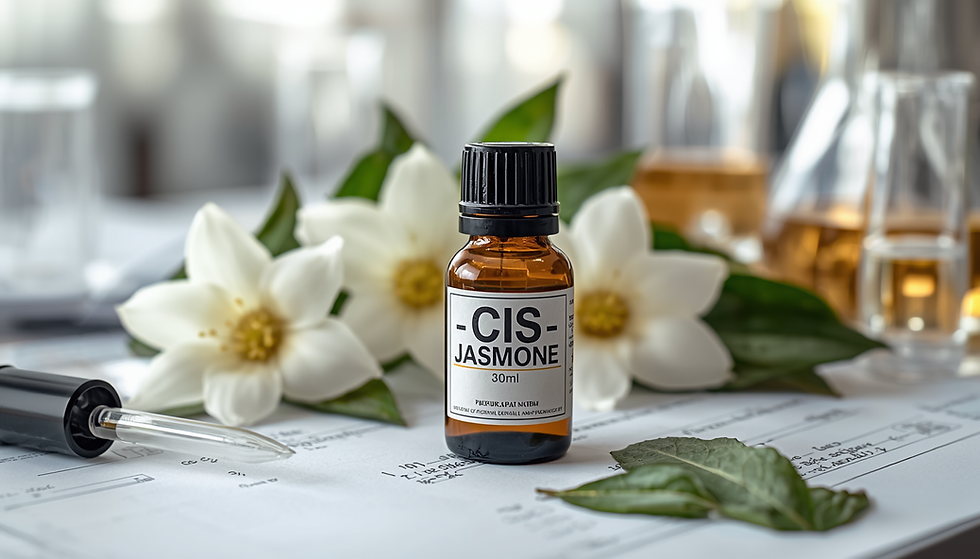
Naturally occurring in jasmine flowers and several other plant species, Cis-Jasmone is characterized by a delicate floral scent with green, fruity, and slightly tea-like nuances. Although it is not an overpowering material on its own, it plays a crucial role in enriching floral accords and bringing them closer to the scent of living flowers. For this reason, many professional perfumers consider it an indispensable ingredient in modern floral perfumery.
The Importance of Naturalism in White Floral Accords
One of the greatest challenges in creating white floral accords is avoiding an artificial or overly synthetic impression. Many floral materials can produce excessive sweetness, soapy facets, or a flat floral character that lacks realism. In nature, however, flowers are never one-dimensional. Their scent is a delicate balance of floral, green, fruity, spicy, and sometimes even earthy elements.
Cis-Jasmone contributes significantly to this natural complexity. Its green and fresh character helps recreate the sensation of blooming flowers in a garden rather than a simple floral note in a formula. Even at very low concentrations, it can transform a floral accord from something pleasant into something remarkably lifelike.
The Role of Cis-Jasmone in Jasmine Accords
Jasmine is one of the most iconic flowers in perfumery, yet reproducing its natural scent is far from simple. While natural jasmine extracts are highly prized, they are expensive and cannot fully capture every aspect of the flower's aroma. As a result, perfumers often construct jasmine accords using a variety of synthetic and natural ingredients.
Cis-Jasmone is one of the key building blocks in this process. Since it naturally occurs in jasmine blossoms, its inclusion immediately adds authenticity to a jasmine accord. It enhances the fresh, green, and radiant aspects of jasmine while softening any harsh or overly sweet facets that may arise from other materials.
Perhaps most importantly, Cis-Jasmone helps recreate the impression of fresh jasmine petals. Rather than smelling like a floral extract, the accord begins to evoke the experience of encountering blooming jasmine flowers in nature. This subtle realism is one of the reasons why Cis-Jasmone is so highly valued among perfumers.
Enhancing Orange Blossom Accords
Orange blossom is beloved for its unique combination of floral softness and citrus freshness. Creating a convincing orange blossom accord requires maintaining a delicate balance between these two characteristics. If the floral elements dominate, the accord may become heavy and dense. If the citrus notes take over, the floral identity can be lost.
Cis-Jasmone serves as an excellent bridge between these contrasting facets. Its green floral character supports the blossom aspect while preserving the freshness and transparency associated with citrus notes. The result is an accord that feels bright, natural, and effortlessly elegant.
This ability to connect different parts of a fragrance composition makes Cis-Jasmone particularly useful in contemporary floral perfumes, where smooth transitions between notes are highly desirable.
Applications in Magnolia and Gardenia Accords
Magnolia and gardenia are among the most challenging flowers to recreate in perfumery. Their scent profiles are rich, creamy, velvety, and luminous all at once. Without careful formulation, these accords can easily become too heavy or overly sweet.
Cis-Jasmone helps maintain balance within these floral structures. Its fresh green nuances introduce a sense of airiness that prevents creamy floral notes from becoming overwhelming. At the same time, its delicate floral character reinforces the natural beauty of the flower itself.
Many perfumers use Cis-Jasmone to create what is often described as the “living flower effect” — the sensation that the flower is still attached to the plant rather than existing as an isolated floral extract. This effect adds realism and sophistication to magnolia, gardenia, and other white floral accords.
Creating Depth and Diffusion
One of the most remarkable qualities of Cis-Jasmone is its ability to add depth without significantly altering the overall fragrance profile. Rather than acting as a dominant note, it functions as a modifier that enriches surrounding materials.
In floral accords, depth is essential for creating a sense of dimensionality. Without it, a fragrance can feel flat and predictable. Cis-Jasmone introduces subtle layers that make the composition more complex and engaging. It encourages the fragrance to evolve naturally on the skin, revealing different nuances over time.
Additionally, Cis-Jasmone can contribute to improved diffusion. When paired with modern floral ingredients, it helps create an airy aura around the wearer, enhancing the perception of elegance and refinement.
Synergy with Other Perfumery Materials
Another reason for Cis-Jasmone’s popularity is its exceptional compatibility with a wide range of fragrance ingredients. It blends particularly well with materials commonly used in white floral compositions.
When combined with Hedione, Cis-Jasmone enhances radiance and transparency. Alongside Benzyl Acetate, it strengthens floral-fruity characteristics and contributes to a more natural jasmine effect. In combination with Phenyl Ethyl Alcohol, it enriches soft floral notes and adds a refined floral texture. When paired with Indole in carefully controlled amounts, it can recreate the sensual and realistic character found in natural jasmine flowers.
This versatility allows perfumers to use Cis-Jasmone in countless floral constructions, from delicate soliflores to complex luxury fragrances.
Cis-Jasmone in Niche and Luxury Perfumery
Modern consumers increasingly seek fragrances that feel authentic, natural, and emotionally engaging. As a result, niche and luxury perfume brands often rely on sophisticated materials that enhance realism without overwhelming the composition.
Cis-Jasmone perfectly fits this requirement. It is rarely the star ingredient of a fragrance, yet its influence can be profound. By improving naturalness, increasing depth, and supporting floral harmony, it elevates the overall quality of a perfume.
Many high-end floral fragrances use small amounts of Cis-Jasmone to create a more realistic blooming-flower sensation. Its subtle contribution often goes unnoticed by consumers, yet it plays a crucial role in shaping the fragrance's elegance and sophistication.
Conclusion
Cis-Jasmone is one of the most valuable yet understated ingredients in modern perfumery. Its delicate blend of floral, green, fruity, and tea-like facets makes it an exceptional tool for enhancing white floral accords. Whether used in jasmine, orange blossom, magnolia, gardenia, or other floral compositions, it brings naturalness, depth, and refinement to the fragrance.
Although it is often present in only trace amounts, its impact can be significant. By bridging floral notes, improving realism, and adding subtle complexity, Cis-Jasmone helps perfumers create fragrances that capture the beauty of flowers as they exist in nature. For this reason, it remains an essential ingredient in both contemporary and luxury perfumery.
This article was researched and written by Galbora.
Use of this content is permitted when citing the source.
📩 Contact Us
📧 Email: info@Galbora.com
🌐 Website: www.Galbora.com
🏢 İçerenköy, Umut Sk. No:10 D:12, 34752 Ataşehir / İstanbul


Comments